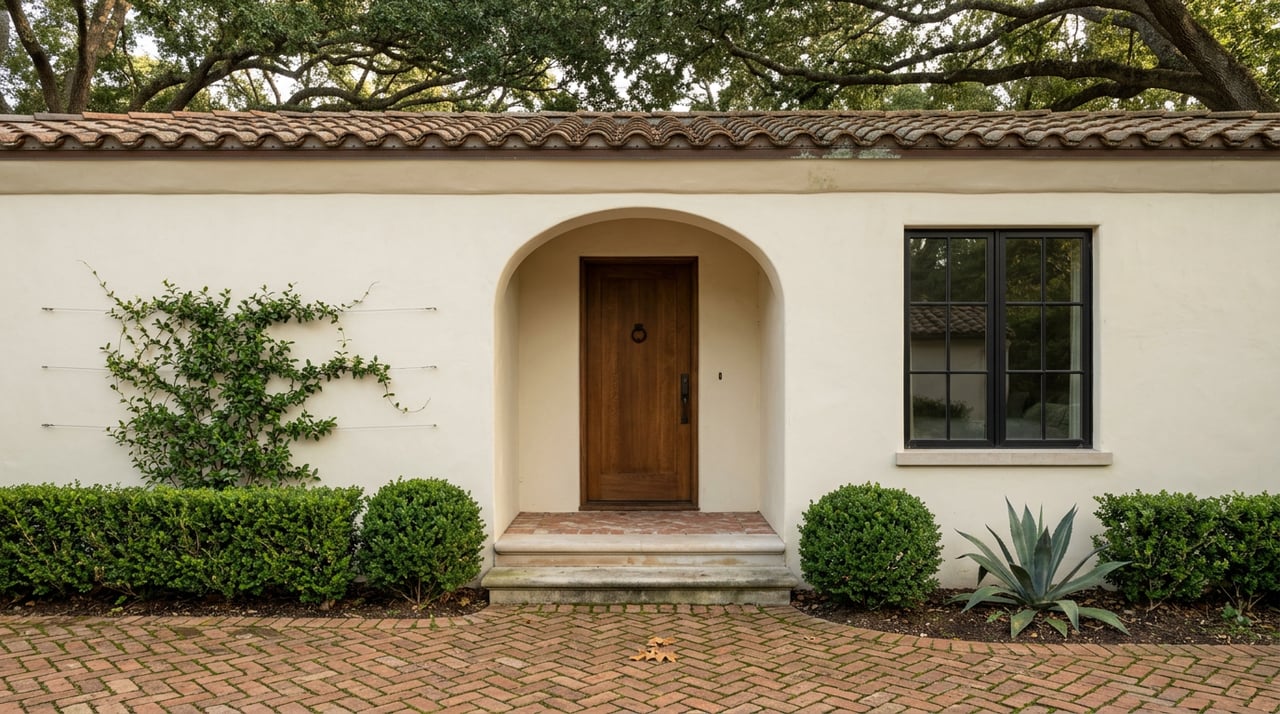
Walk the loop around Crestwood Park on a Saturday morning and you will pass strollers, dog leashes, a few kids on bikes cutting figure eights near the swings, and almost no storefronts. That is not an oversight. Terrell Hills, all 1.6 square miles of it, has effectively no commercial retail inside its own boundary. No coffee shop with a line out the door, no corner grocery, no strip of restaurants to wander after dinner. For a city of just over 5,000 residents, that is an unusual amount of nothing.
And yet the calendar here is full. Not full in the way a big subdivision's Facebook group is full of yard sale posts, but full in the way a small town's calendar used to be, before most small towns got absorbed into whatever city grew up around them. Terrell Hills never got absorbed. Incorporated in 1939, it still runs its own police department, its own fire department, and its own event calendar, and that last one is doing more work than most residents probably give it credit for.
This is the part of Terrell Hills that does not show up in a drive-by. The city itself, not a shopping district, not a homeowners' association newsletter, is the thing holding the social year together. And this year it made a decision that says something about where that arrangement is headed next.
Two Small Pieces of Land Carrying a Lot of Weight
Terrell Hills has two green spaces that function as its entire public commons: Crestwood Park and the Geneseo Esplanade. Everything else is residential streets and mature oak canopy.
Crestwood Park is the larger of the two and does the most recurring work. According to the city's own parks page, it hosts an Easter Egg Hunt and a Holiday Parade with Pictures with Santa Claus, the kind of programming a mid-sized suburb usually leaves to a mall or a church. Here it is a city department calendar item.
The Geneseo Esplanade carries a different job. It is where the Annual July 4th Parade and Celebration ends, after the parade itself starts blocks away at Ivy and Eldon and works its way through the neighborhood to a community-wide block party and barbecue on the esplanade grounds. That route, and that finish line, has been the same for years. Ask a longtime resident where the parade ends and they will not need to check a map.
Two green spaces are not a lot of square footage. But they are not trying to be a park system. They are trying to be the one place where a city with no downtown still gets a downtown's worth of gathering.
The City Also Teaches Bike Safety and Sells Garden Tour Tickets
What makes Terrell Hills unusual is not just that it has a parade route. It is how much of the rest of the calendar the city government, or the civic organizations tied to it, choose to run themselves rather than leave to whatever business happens to be nearby.
Back in April, the Terrell Hills Police Department hosted a Bike and E-Bike Safety Event at its own building on New Braunfels Avenue, complete with a safety class taught by a bike patrol officer, a bicycle rodeo for younger kids, a guided ride for riders ten and up, and free helmets while supplies lasted. That is a police department running what most places would outsource to a bike shop's marketing budget.
The Alamo Heights-Terrell Hills Garden Club, founded in 1932 and a member of the Garden Club of America since 1978, runs a self-guided tour through seven private gardens and architecturally notable homes, with ticket proceeds benefiting the Terrell Hills Green Spaces Fund. That fund exists because the club itself decided the two green spaces the city already has deserved ongoing private investment on top of whatever the municipal budget covers.
Line up a year's worth of these and a pattern shows up:
- Easter Egg Hunt and Holiday Parade with Santa, both at Crestwood Park
- Bike/E-Bike Safety Day at the police department, complete with a kids' bicycle rodeo
- The private garden tour benefiting the Terrell Hills Green Spaces Fund
- The July 4th Parade, starting at Ivy and Eldon and ending with a block party and barbecue on the Geneseo Esplanade
- An annual community-police gathering with live entertainment and food trucks
None of these require driving anywhere. None of them are run by a business trying to sell something. That is the actual texture of living here, and it is a texture that a market comparison chart or a school ranking table cannot capture.
The $2.4 Million Decision to Connect the Two Systems
Here is where it gets interesting for anyone who already lives inside those 1.6 square miles.
Terrell Hills residents do not do all of their eating and errands inside the city. They cannot. There is nowhere to do it. The actual dining life for most residents happens a few blocks over on the Broadway corridor, at places like Paloma Blanca and Paladar Fusion for a refined take on Mexican cooking, or Bistro09 for a modern French-inspired plate. None of those addresses are technically inside Terrell Hills. All of them are a short walk or a five-minute drive from it.
That gap, the physical space between the residential side streets where the city's own calendar happens and the commercial strip where residents actually go to eat, has never had much civic investment of its own. It was just the in-between.
That changed this year. The Terrell Hills City Council approved a $2.4 million project to add pedestrian walkways, heritage oak trees, and custom lighting along Broadway Street. Read that plainly and it sounds like a streetscape upgrade, the kind every corridor gets eventually. Read it against everything else on this calendar and it looks like something more specific: the city investing, for the first time at this scale, in the connective tissue between the government-run side of Terrell Hills life and the commercial side that sits just outside its border.
For years the arrangement worked because the two systems, city-run civic life inside the boundary and restaurant-run social life just outside it, operated independently of each other. You walked or drove across an unremarkable stretch of sidewalk to get from one to the other. This project treats that stretch as worth designing on purpose. Better lighting and a wider walkway do not just make an evening walk to Bistro09 more pleasant. They are a statement that the walk itself is now considered part of the neighborhood's infrastructure, not just an afterthought between two separate things.
What This Actually Changes
None of this turns Terrell Hills into a place with its own Main Street. It will still have no retail inside its boundary next year, or the year after. The two parks will still be the entire public commons. The garden club will still fund the green spaces the city cannot fully cover on its own budget.
But the assumption that a quiet, tree-lined enclave with no commercial district is somehow socially thin does not hold up against the actual calendar. A city this small running its own bike safety curriculum, its own holiday programming, and its own parade route, while also being one of the few communities in the area willing to spend real money making the walk to its neighbors' restaurants better, is not thin. It is just organized differently than most places its size, with the government doing the work a downtown usually does, and this year, quietly extending that work past its own property line.
If you already live inside those 1.6 square miles, you have probably felt this without naming it. The reason Terrell Hills feels distinct from the neighborhoods around it is not the size of the lots. It is that the city itself is still acting like the town it originally incorporated to be, one parade, one garden tour, one bike safety class at a time.
If you are weighing what changes like the Broadway project mean for your own property here, or simply want a second opinion grounded in what is actually happening on the ground, Paulette Jemal welcomes a conversation. Request your luxury home valuation whenever you are ready to talk specifics.