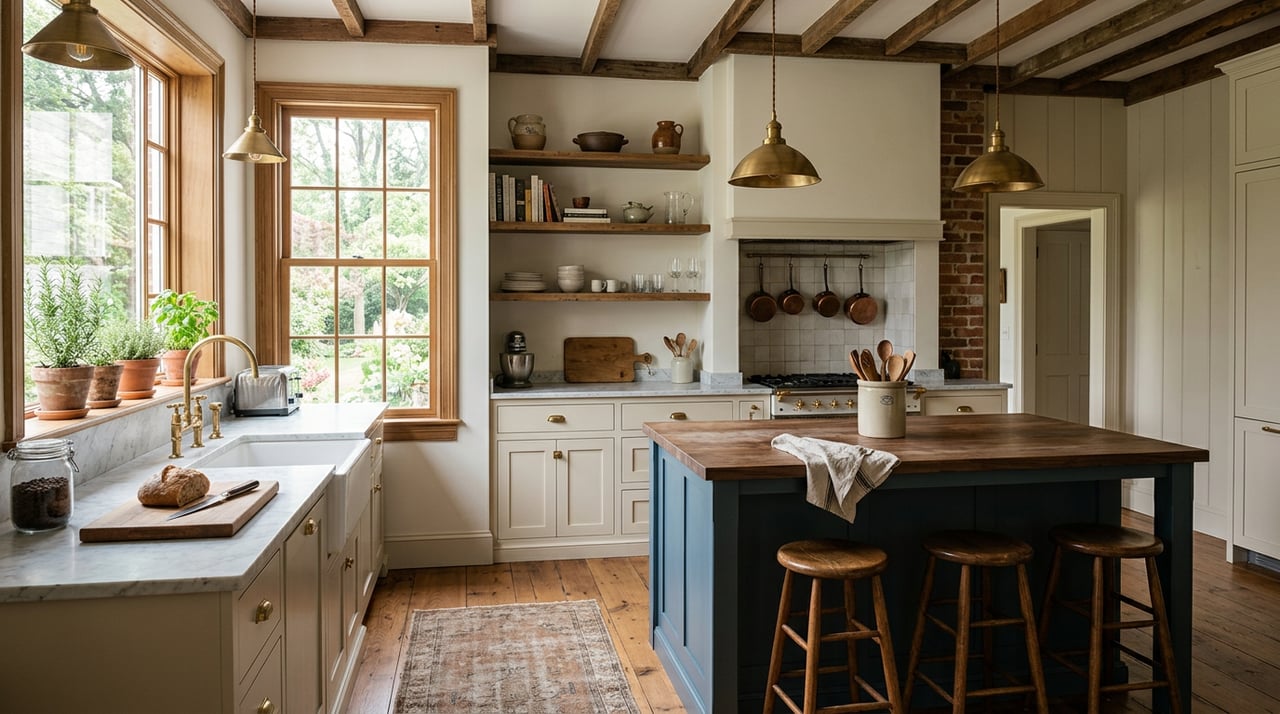
A King William Victorian that had refinished its original pine floors, torn out 1970s wall paneling, and added two new HVAC systems went back on the market in 2025 for $699,000. Three years earlier, right after those upgrades were finished, the same house had asked $975,000. That is a swing of nearly $300,000 on one property, in one historic district, without a single wall moved in between.
If you have been comparing King William to other San Antonio neighborhoods by pulling up the median home price, you have probably run into a version of this same whiplash. Every source seems to quote a different number, and none of them agree on which direction the market is even moving. That disagreement is not a data error. It is what happens when a neighborhood this small gets treated like a market with enough transactions to trust a single headline figure.
The Number Nobody Can Agree On
Pull three market snapshots for King William this year and you will get three different stories. One national tracker showed a three-month median sale price of $730,000 through May 2026, up 60.4 percent from the same period the year before. A separate live snapshot from that same platform, checked in July 2026, put the number at $800,727, up 66 percent year over year. A different portal's February 2026 read landed at $562,500, essentially flat against last year. A widely cited agent snapshot this year quoted a median listing price near $795,000 with pricing around $396 per square foot.
None of these sources are wrong. They are each describing a real slice of a very thin market, and thin markets produce numbers that jump around depending on exactly which weeks of listings or closings you happen to capture.
Nine Sales Is Not a Market
Here is why small monthly samples can produce volatile figures. In May 2026, King William recorded nine total home sales. Nine. The year before, that number was six.
When your entire monthly sample is in the single digits, one exceptional transaction can move the reported median more than any real shift in buyer demand. A fully restored Victorian with a rebuilt kitchen and a pool sells for well over a million, and the median jumps. A distressed estate sale or an unrenovated fixer-upper closes the same month, and the median drops just as fast. Nothing about the underlying neighborhood changed. The sample just happened to contain a different mix of houses.
Compare that to the county as a whole. Bexar County-wide MLS data covering October 2025 through April 2026 showed a median sale price of $288,495, with 13.4 months of inventory and an average of 97.1 days on market. That number barely moves month to month, not because the county market is calmer, but because it is built from thousands of closings instead of nine. Outliers get absorbed into a big enough sample. King William doesn't have a big enough sample.
| What's being measured | Reported figure | Time window |
|---|---|---|
| National tracker, 3-month median | $730,000 (+60.4% YoY) | Through May 2026 |
| Same tracker, live neighborhood page | $800,727 (+66.0% YoY) | As of July 2026 |
| Different portal's monthly read | $562,500 (+0.28% YoY) | As of February 2026 |
| Widely cited agent snapshot | ~$795,000 median listing, ~$396/sq ft | 2026 |
| Bexar County-wide MLS | $288,495 median sale | Oct 2025 to Apr 2026 |
Every row in that table is accurate. None of them, on its own, tells you what a King William house is worth.
What Price Per Square Foot Actually Tells You
If the median is too noisy to trust month to month, price per square foot is the steadier read, and it still moved meaningfully this year: the same tracker that showed the 60 percent median jump also put King William's price per square foot at $413, up 14.4 percent year over year through May 2026. That's a real signal without the seismic look of a 60 percent headline.
Even that number bends hard depending on one variable that has nothing to do with the calendar: restoration status. Local guides put King William's home price range anywhere from $400,000 to $1.2 million depending on lot size and condition, and the gap between a "ready for your vision" fixer-upper and a fully restored home two blocks away can run into the hundreds of thousands of dollars for comparable square footage. A few things reliably explain that gap:
- Whether the kitchen, HVAC, and bathrooms have already been updated, or still need it
- Whether the roof, plumbing, and electrical systems are original or replaced
- Whether the foundation has been inspected and repaired, since foundation work on pre-1900 homes typically runs $15,000 to $40,000
- Lot size and whether the home sits inside the full historic district boundary or the adjacent conservation area
Ask about restoration status before you ask about the neighborhood median. It will tell you more.
Why the Inventory Stays This Thin
The small sample size isn't an accident of timing. It's structural, and it comes from the same designation that gives King William its character.
Most exterior changes visible from the street inside the King William Historic District require a Certificate of Appropriateness from the City of San Antonio's Office of Historic Preservation before a standard building permit is even issued. For buyers planning to add square footage, replace windows, or change a roofline, that review step typically adds 30 to 90 days on top of normal permitting timelines. We've written a full breakdown of that process, including how the Certificate of Appropriateness and Historic and Design Review Commission review interact, in our King William historic permits guide.
That same protection also rules out the teardown-rebuild cycle that quietly smooths pricing in newer neighborhoods elsewhere in the city. The housing stock stays fixed in a way it doesn't in less restricted areas, which means the total pool of homes that could sell in any given month stays small on purpose. Fewer possible sales means each individual sale carries more statistical weight, which is exactly why one restored mansion or one distressed estate can swing a monthly median by 60 percent without the underlying market actually shifting that much.
What This Means If You're Comparing Neighborhoods
If you're weighing King William against another San Antonio historic district, or against a newer gated community altogether, don't anchor your comparison to whichever median price you saw first. Ask which month it covers, how many sales it's built on, and whether the homes in that sample were renovated or not. A $730,000 three-month median reported alongside nine May sales and a $288,495 county-wide median built on thousands of sales are not answering the same question, even though they look like they belong on the same chart.
What holds steadier, and what's actually worth comparing across neighborhoods, is price per square foot adjusted for restoration status, plus a realistic accounting of what a historic district's review process will cost you in time if you plan to change anything about the exterior. Those numbers move slower, and they tell you more about what you're actually buying.
A Few Straight Answers
Should I ignore the median price entirely? Not entirely. It's a useful signal of direction over a full year, just not a reliable one from month to month in a market this thin. Look at trailing 12-month figures rather than any single monthly snapshot.
Does a lower price per square foot always mean a better deal? Not on its own. In King William, a lower number often reflects a home that still needs foundation, electrical, or plumbing work, which can offset the savings once you budget for it.
How long should I expect a renovation approval to take? Plan for the Certificate of Appropriateness review before you plan the construction timeline itself. Straightforward exterior projects can move faster, but budgeting 30 to 90 days for review before permitting begins is a realistic starting point.
King William rewards buyers and sellers who read past the headline number, and that's exactly the kind of read Paulette Jemal does for every historic listing she takes on, house by house, comp by comp, rather than by the month's noisy average. If you're trying to figure out what your King William home is actually worth, or what a specific renovated property should really cost, request your luxury home valuation and get a comparison built from the right sample, not the loudest one.
This article is general information, not legal, tax or financial advice. Consult a qualified professional about your situation.