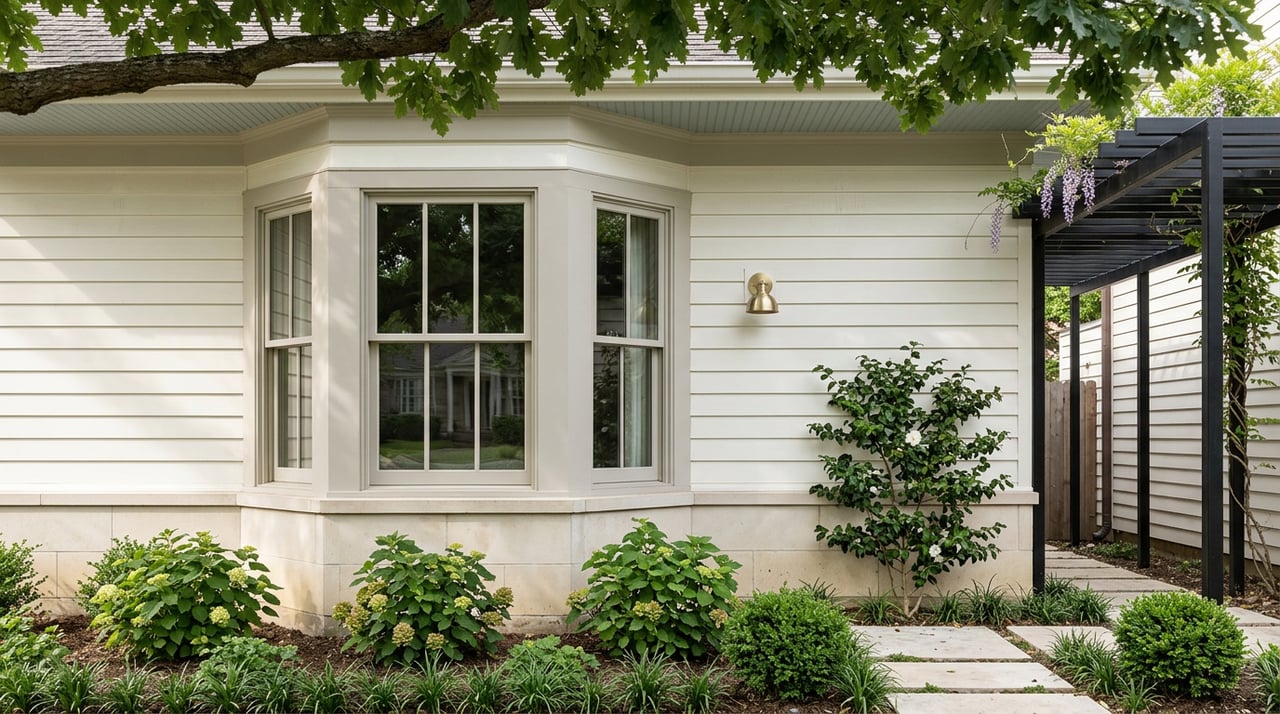
The oldest thing in Alta Vista is water. San Pedro Springs has been running for centuries, and the park built around it is one of the oldest public parks in the United States. The newest thing in Alta Vista is a bakery case set inside a sunny yellow Victorian at the corner of West Russell Place and San Pedro Avenue, where a family lives upstairs and pulls kolaches from the oven downstairs.
Between those two points, at a walking pace of about twenty minutes end to end, sits the argument this post wants to make. Alta Vista's community life doesn't cluster around a retail strip the way most San Antonio neighborhoods do. It arranges itself around a park, and the chefs, coffee people, and gardeners who shape the neighborhood's week have deliberately planted their work in old houses and cottages that line the streets leading to it. If you already live here, the map you use on weekends is a map of thresholds, not storefronts.
The Park Is The Anchor, Not The Strip
Most walkable neighborhoods have a commercial spine. Alta Vista has a park with civic infrastructure grafted onto its edges. The neighborhood is bounded on the south by San Pedro Springs Park, one of the oldest public parks in the United States, and is also home to the historic Public Theater and San Pedro Library. That single sentence rearranges how a weekend works. The library is not a stop on the way somewhere else. The theater is not a destination that requires a car. Both are attached to the green space that residents pass through to reach everything else.
The Public SA was founded as San Antonio Little Theater in 1912 as part of the growing Little Theatre movement sweeping the nation, and it is now housed in the first city-owned, city-built theater in the U.S. The address, 800 W Ashby Place, puts it a short walk from most homes in the conservation district. Each year, staff and nearly 500 volunteers produce a series of plays across two spaces: the Russell Hill Rogers Theater for larger musicals and the Cellar Theater for dramas, comedies, and experimental works. A Saturday evening at the Cellar Theater followed by a walk home through the park is not a night out that requires planning around traffic. It requires shoes.
Dinner In A Cottage, Breakfast In A Victorian
The pattern of Alta Vista's food scene is a pattern of adaptive reuse. Nothing important happens in a strip mall bay. It happens in houses.
Outlaw Kitchens sits in a charming residential cottage in Alta Vista, serving a chef-curated, hyper-seasonal menu that changes weekly, in a cozy, intimate setting that feels like an exclusive private dinner party. The address is 2919 N Flores Street. Hours run Thursday through Saturday, 5 pm to 8:30 pm, with a three-course prix-fixe dinner in the $35 to $45 range. The name to know is Paul Sartory and Peggy Howe, whose menus, in the read of one critic, work like a confetti burst of studied technique, from a lamb persillade you would never stress yourself with at home to a gratin dauphinoise you might attempt at Thanksgiving. Outlaw was one of the twelve nominees for CultureMap San Antonio's 2026 Neighborhood Restaurant of the Year, an award decided at the Briscoe Museum in May.
Half a mile away, the pattern repeats in a different key. In the garden of a sunny yellow Victorian, blooms on lush Esperanza plants match the century-old dwelling that is home to a neighborhood bakery and the baker herself. Edinburg transplants Becky Medellin and her husband Jack Salmon opened Scratch Kitchen in 2017 at the corner of West Russell Place and San Pedro Avenue, where they make everything from scratch.
"We played with the idea of expanding the restaurant and doing another concept upstairs, but I think we've settled on the idea that we'd like to stay and live up there. This is the only house our kids have lived in, and it's sentimental for us."
That decision, from Medellin to the San Antonio Report in May 2026, is part of what makes Alta Vista feel the way it does. The restaurant is not scaling up. It is staying inside the house. What did scale is the wholesale side: in 2020 they began leasing a production kitchen on the East Side, then in 2024 opened their own at 1612 E. Hackberry, which now supplies dozens of other spots, including Press Coffee, King William Coffee House, Nowhere Bookshop, and The Honeybean Coffee & Tea, and turns out 1,400 kolaches a week using sausage from Opa's Smoked Meats of Fredericksburg. If you have eaten a pastry at a cafe on the near north side lately, there is a real chance it was baked by a family who lives above their storefront a few blocks from you.
A Weekend Loop On Foot
Because so much sits within walking distance, a Saturday in Alta Vista tends to organize itself as a sequence rather than a set of separate outings. One reasonable version:
- Morning coffee at Philo Coffee, either on the small patio or in the indoor lounge.
- A slow lap of San Pedro Springs Park, past the pool, the pond, and the tennis courts.
- A stop at the San Pedro Library, tucked into the same park.
- Lunch at Scratch Kitchen on West Russell, with kolaches to take home.
- An afternoon shift at the Alta Vista Community Micro Garden, a small outdoor plot residents share.
- Dinner at Outlaw Kitchens on North Flores, followed by a play at The Public SA on West Ashby.
None of that requires driving. The Nextdoor tally of what neighbors themselves cite as the reasons they love the place reads like the description of an urban village: architecture, convenient, historic, neighbors, parks, peaceful, restaurants, walkability, walking, and welcoming. Walkability is not marketing copy here. It is the operating condition of the neighborhood.
The Calendar Residents Actually Watch
If you have lived in Alta Vista for more than a season, the year has a shape. Some of it is on the city calendar. Most of it is on the neighborhood association's.
The Alta Vista Neighborhood Association holds General Assemblies in January, March, May, September, and November, and is a 501(c)(4) non-profit organization with annual membership at $15 per individual, $30 per couple, or $35 per business. Between those meetings, the AVNA runs the events that turn strangers on the same block into neighbors: Porch Fest, Neighborhood Night Out, holiday parties, historical park tours, and potlucks.
Porch Fest is worth watching for even if you have been to it before. The first Alta Vista and Beacon Hill edition, back in 2017, was nine bands on nine different house porches on a single Saturday, with more than 100 people showing up to listen. Organizer Jennifer Khoshbin described it as a set-up where "one porch led to the other throughout the entire day," a format worked out with Christina Wright and April Breiten as part of a group called Alta Vista Arts. The frame is inherited from other cities, but the choreography is local: the audience walks, the stages don't. A Brackenridge Park Conservancy director watching that first year compared it to Southtown's First Fridays and said, "This was how First Friday started. It was about building community and having fun with your neighbors."
The through-line is participation. You don't buy a ticket to Porch Fest. You bring a lawn chair. You don't sign up to the Micro Garden as a program. You show up. The AVNA site is the closest thing to a canonical calendar.
What The Shape Of The Neighborhood Is Trying To Tell You
Look at Alta Vista's most talked-about additions of the last decade and a pattern surfaces. A bakery moves into a Victorian instead of a lease-up. A prix-fixe kitchen opens in a cottage instead of a build-out. A theater company stays in the 1912 building it inherited. A porch-based music festival routes an audience past living rooms instead of into a venue. A community garden sits on a small residential lot rather than a park lease.
The shape rhymes with the neighborhood's original planning DNA. Many of the homes were built from the 1920s to 1940s, and the housing stock ranges across French Eclectic, American Foursquare, cottage, and ranch-style designs. Alta Vista is a Neighborhood Conservation District, which means the exterior character of those houses is protected by design. New uses have to fit inside the old bones. That constraint, more than any single business, is what makes the weekend rhythm feel curated without feeling staged.
For a resident, the practical takeaway is small but real. When something new opens in Alta Vista, look at the house it opened in before you look at the menu. The building is usually telling you what the operator intends. A young family who bought a Victorian is not going to franchise. A chef couple who chose a cottage over a lease space in Southtown is not planning to expand to five locations. The scale of the container predicts the scale of the ambition, and in Alta Vista, the containers are almost always residential.
That is the quiet luxury of living here. The neighborhood does not ask you to be impressed by it. It asks you to walk through it.
If you are thinking about how a home in this pocket of San Antonio would be presented to the kind of design-forward buyer who values exactly this sort of neighborhood character, Paulette Jemal works with sellers whose homes deserve to be marketed as a lifestyle, not a listing. Request Your Luxury Home Valuation to start that conversation.